What to put on a narrow hallway wall?
Narrow hallways often feel like afterthoughts. They connect rooms but rarely get the same design attention as living areas or bedrooms. A bare wall in a tight corridor can make the space feel even more closed-in, yet adding the wrong piece of decor creates visual clutter and makes the passage feel cramped. The trick is to choose something that adds depth without eating into the limited floor area, and that is where compact botanical wall decor comes into its own.
Wall-mounted greenery does not need a console table or a floor pot. It lives on the wall itself, so it claims zero square footage. That makes it a natural fit for a hallway where every inch counts. But not every botanical piece works in a narrow setting. Scale, placement, and the type of material all matter. The wrong choice can make a hallway feel even narrower, while the right one can trick the eye into seeing more space.
Why botanical decor suits tight hallways
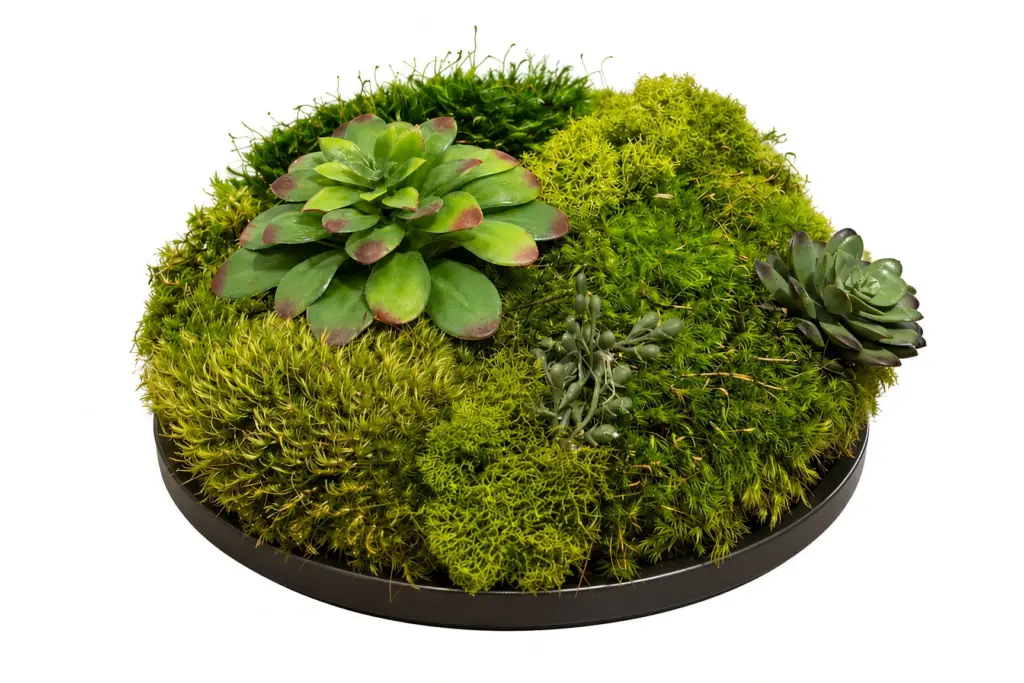
Plants and organic forms soften the hard lines of a corridor. A hallway is usually a long, straight box with doors and switch plates. Adding a natural texture breaks up that repetition and gives the eye something restful to land on. Preserved moss, in particular, offers a consistent green texture for small rooms without the maintenance worries of live plants. It stays the same colour and shape year-round, which is useful in a space that does not get much natural light.
Because preserved moss does not need soil or water, it can be mounted flush against the wall. There are no pots to knock over and no watering schedule to remember. This makes it a practical option for a busy household where the hallway is a high-traffic zone. The material itself also absorbs a little sound, which can help quieten the echo that often comes with a long, narrow corridor.
Placement: where to put it
Position is everything in a narrow hallway. The natural focal point is the wall straight ahead when you enter the corridor. That end wall is the first thing people see, so a piece of compact botanical wall decor there can set the tone for the whole home. Because the wall is far away, a medium-sized panel works well without overwhelming the space.
If the hallway runs alongside a staircase, the vertical wall beside the stairs is another prime spot. Mounting a tall, narrow moss panel there draws the eye upward and emphasises the height of the room rather than its width. This helps counteract the tunnel feeling that long hallways create. For very tight corridors, consider placing the decor at eye level rather than centering it. That keeps the walkway visually clear and prevents the piece from feeling like an obstacle.
Corners and turns
If the hallway has a corner or a bend, that is an excellent place for a botanical accent. The change in direction already breaks up the corridor, and a moss panel or a small arrangement can mark the turn in a way that feels intentional. Avoid placing anything at the exact midpoint of a long, straight wall, because that can make the hallway feel even longer by splitting it into two equal halves. Instead, offset the piece toward one end or the other to create asymmetry, which feels more dynamic.
Choosing the right size and shape
Scale is the most common mistake. A piece that is too small gets lost on a large wall and looks like an afterthought. A piece that is too wide makes the hallway feel narrower because it pushes the walls in visually. A good rule of thumb is to keep the width of the decor to about half the width of the wall it hangs on. For example, a three-foot-wide wall can comfortably hold a panel that is around eighteen inches wide. That leaves breathing room on each side.
Vertical orientation usually works better than horizontal in a narrow hallway. A tall, slim panel echoes the proportions of the corridor itself and makes the ceiling feel higher. Round or oval pieces can also work well because they have no sharp corners that echo the hard edges of the walls. The organic shape softens the geometry of the space, which is exactly what a boxy hallway needs.
Layering with other elements
Compact botanical wall decor does not have to stand alone. In a narrow hallway, you can pair it with a slim mirror or a small shelf. A mirror placed opposite the botanical piece bounces light around and makes the corridor feel wider. A narrow shelf below the moss panel can hold keys or a small dish, turning the wall into a functional landing zone. The key is to keep everything flat against the wall so that nothing protrudes into the walkway.
If the hallway has a low ceiling, avoid anything that hangs down more than a few inches. A deep frame or a three-dimensional arrangement can feel like it is reaching out into the space. Stick to flat or nearly flat panels that sit flush with the wall. Preserved moss sheets that are mounted directly onto a backing board are ideal because they add texture without depth.

Lighting considerations
Hallways are often underlit. A botanical piece can look dull if it is not properly illuminated. A small picture light mounted above the moss panel can make a big difference. The light brings out the variation in the moss and casts soft shadows that add depth. Warm white bulbs (around 2700K) are best because they enhance the green tones without washing them out. Avoid cool white or daylight bulbs, which can make preserved moss look grey or artificial.
If wiring a light is not practical, battery-operated LED picture lights are a good alternative. They mount with adhesive and can be positioned exactly where needed. The light should hit the panel at a slight angle, not straight on, to create highlights and shadows that give the moss a more natural appearance.
What to avoid
Some common mistakes can ruin the effect. Avoid placing botanical decor directly opposite a window if the hallway gets direct sunlight. Prolonged exposure to UV light can fade preserved moss over time. Even though preserved moss is stable, it is not immune to strong light. A northern or eastern wall is usually safest.
Do not overcrowd the wall. A single well-chosen piece often has more impact than a cluster of small items. If you do want to create a grouping, keep it tight and deliberate. Three small panels arranged in a vertical line can work, but spread them too far apart and the wall starts to look busy. The goal is to add green texture for small rooms, not to fill every inch of wall space.
Also avoid hanging anything that requires the viewer to step back to appreciate it. In a narrow hallway, there is no room to step back. The decor has to work at close range, so details matter. Choose pieces with a rich, varied surface that looks good from a foot away. Smooth, uniform moss sheets can look flat and plasticky up close. A mix of moss types with different shades and textures is more convincing.
Maintenance and longevity
Preserved moss requires very little care, but it is not zero. Dust can settle on the surface over time, especially in a hallway where people pass frequently. A gentle blast from a hairdryer on the cool setting or a soft brush can lift the dust without damaging the moss. Never use water or cleaning products, because they can dissolve the preserving agents and cause the moss to discolour or rot.
Keep the moss away from direct heat sources like radiators or heating vents. Dry heat can make the preserved material brittle. Similarly, avoid bathrooms or very humid hallways, because moisture can encourage mould on the backing board. A stable indoor environment with moderate humidity is ideal. In most homes, a hallway meets those conditions easily.
Compact botanical wall decor is one of the simplest ways to turn a forgotten corridor into a pleasant transition space. The right piece adds a calming natural element, makes the proportions feel better, and requires almost no upkeep. By choosing a vertical or rounded shape, placing it thoughtfully, and lighting it well, you can make even the narrowest hallway feel intentional and welcoming.